1 month ago


In the Name of Allah, the Most Gracious, the Most Merciful. May the peace and blessings of Allah be upon the Imam of all creation, the master of the children of Adam, and upon his family and companions.
The definition of the Holy Quran states that it is an act of worship to recite it (مُتَعَبَّدٌ بِتِلاوَتِهِ). This inherently means that reciting the Quran is an act of worship and a means of drawing closer to Allah, the Almighty.
The command to recite the Quran is mentioned in many verses, including the saying of Allah (The Exalted):
"Recite, [O Muḥammad], what has been revealed to you of the Book and establish prayer." (Quran, Al-'Ankabūt: 45)
(اتلُ ما أوحي إليك من الكتاب وأقِمِ الصَّلاة)
"I have only been commanded to worship the Lord of this city, Who has made it sacred and to Whom belong all things. And I have been commanded to be of the Muslims, and to recite the Qur’ān." (Quran, An-Naml: 91-92)
(إنما أمِرت أن أعبد رب هذه البلدة الذي حرمها وله كل شيء وأمرت أن أكون من المسلمين، وأن أتلو القرآن)
"...So recite what is easy [for you] of the Qur’ān." (Quran, Al-Muzammil: 20)
(فاقرؤوا ما تيسر من القرآن)
Many verses also highlight the immense reward of recitation, such as the saying of Allah (The Exalted):
"Indeed, those who recite the Book of Allāh and establish prayer and spend [in His cause] out of what We have provided them, secretly and publicly, [can] expect a commerce that will not perish—that He may give them in full their rewards and increase for them from His bounty. Indeed, He is Forgiving and Appreciative." (Quran, Fāṭir: 29-30)
(إن الذين يتلون كتاب الله وأقاموا الصلاة وأنفقوا مما رزقناهم سراً وعلانية يرجون تجارة لن تبور، ليوفيهم أجورهم ويزيدهم من فضله إنه غفورٌ شكور)
As for the noble prophetic traditions (Aḥādīth) concerning the virtue of Quran recitation, they are numerous. Scholars have compiled dozens of books dedicated to collecting and classifying these traditions, such as:
Faḍā’il al-Qur’ān (The Virtues of the Qur’ān) by Abū ‘Ubayd al-Qāsim bin Sallām (d. 224 AH).
Faḍā’il al-Qur’ān by An-Nasā’ī (d. 303 AH).
Faḍā’il al-Qur’ān wa Tilāwatih (The Virtues of the Qur’ān and its Recitation) by Abū al-Faḍl ar-Rāzī (d. 454 AH), and others.
Below are some Prophetic narrations on the immense reward for and the encouragement to engage in Quran recitation and learning:
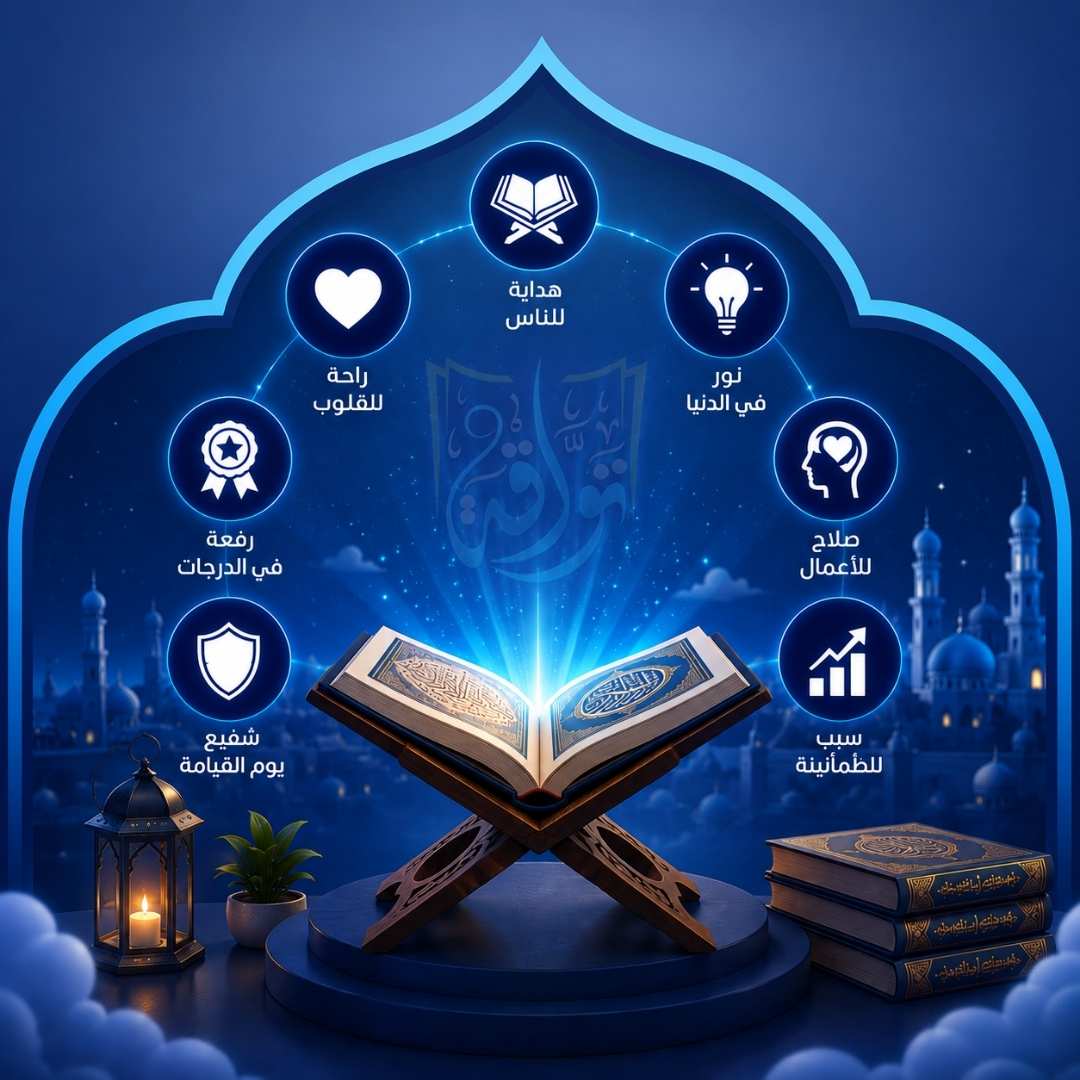
On the authority of ‘Abdullāh bin ‘Amr (may Allah be pleased with them both), the Prophet (peace and blessings of Allah be upon him) said: "It will be said to the companion of the Qur'an [i.e., the one who memorized and acted upon it] on the Day of Resurrection: 'Recite and ascend [in degrees] and recite in a slow rhythmic style as you used to recite in the world, for your place will be at the last verse you recite.'" (Hadeeth: يقال لصاحب القرآن يوم القيامة اقرأ وارق في الدرجات، ورتل كما كنت ترتل في الدنيا، فإن منزلتك عند آخر أية كنت تقرأها)
On the authority of ‘Uqbah bin ‘Āmir (may Allah be pleased with him), the Messenger of Allah (peace and blessings of Allah be upon him) said: "Learn the Book of Allah, take care of it (i.e., memorize and keep reviewing it), announce it, and chant it. By the One in Whose Hand is my soul, it slips away faster than a she-camel from its tethering rope (when it is released from the tether)." (Hadeeth: تعلموا كتاب الله وتعاهدوه وافشوه وتغنوا به، فوالذي نفسي بيده لهو أشد تفلتاً من المخاض في العقل)
On the authority of ‘Uthmān bin ‘Affān (may Allah be pleased with him), the Prophet (peace and blessings of Allah be upon him) said: "The best among you is the one who learns the Qur’an and teaches it." (Hadeeth: خيركم من تعلم القرآن وعلمه)
On the authority of ‘Abdullāh bin ‘Umar (may Allah be pleased with them both), the Messenger of Allah (peace and blessings of Allah be upon him) said: "The example of the companion of the Qur’an is like that of the hobbled camels; if he tends to them, he keeps them, and if he lets them go, they run away." (Hadeeth: إنما مثل صاحب القرآن كمثل الإبل المعلقة إن عاهد عيها أمسكها وإن أطلقها ذهبت)
On the authority of Abū Hurayrah (may Allah be pleased with him), he heard the Messenger of Allah (peace and blessings of Allah be upon him) say: "Allah does not listen to anything (with pleasure) as He listens to a Prophet with a good, loud voice chanting the Qur’an." (Hadeeth: ما أذن الله لشيء ما أذن لنبي حسن الصوت يتغنى بالقرآن يجهر به)
On the authority of Abū Mūsā al-Ash‘arī (may Allah be pleased with him), the Messenger of Allah (peace and blessings of Allah be upon him) said to him: "Had you seen me while I was listening to your recitation last night, you would have seen that you have been given a sound instrument from the sound instruments of the family of Dāwūd (David)." (Hadeeth: لو رأيتني وأنا أستمع لقراءتك البارحة، لقد أوتيت مزماراً من مزامير آل داوود)
On the authority of Abū Sa‘īd al-Khudrī: Usayd bin Ḥuḍayr (may Allah be pleased with them both) was reciting at his drying place one night when his horse suddenly jumped. He recited again, and the horse jumped a second time. He recited a third time, and it jumped again. Usayd said: "I was afraid that it might step on Yaḥyá – his son – so I stood up and saw something like a canopy above my head with lights resembling lamps hanging from it, ascending in the sky until I could no longer see it." He said: "In the morning, I went to the Messenger of Allah (peace and blessings of Allah be upon him) and said: 'O Messenger of Allah, last night, while I was reciting at my drying place, my horse jumped.' The Messenger of Allah (peace and blessings of Allah be upon him) said: 'Recite, O Ibn Ḥuḍayr!' He said: 'I left the place because Yaḥyá was close to it, and I was afraid it might step on him. Then I saw something like a canopy with lights resembling lamps ascending in the sky until I could no longer see it.' The Messenger of Allah (peace and blessings of Allah be upon him) said: 'Those were the angels that were listening to your recitation. Had you continued reciting, people would have seen them, and they would not have been concealed from them.'" (Hadeeth: أن أسيد بن حضير رضي الله عنهما بينما هو ليلةً يقرأُ في مربده إذ جالت فرسه فقرأ ثم جالت أخرى، فقرأ، ثم جالت أيضاً، فقال أسيد: فخشيت أن تطأ يحيى – أي ابنه- فقمت إليها فإذا مثل الظلة فوق رأسي فيها أمثال السرج عرجت في الجو حتى ما أراها، فقال: فغدوت على رسول الله صلى الله عليه وسلم فقلت: يا رسول الله بينما أنا البارحة من جوف الليل أقرأ في نربدي إذ جالت فرسي، فقال رسول الله صلى الله عليه وسلم: اقرأ ابن حضير، قال: فانصرفت، وكان يحيى قريباً منها خشيت أن تطأه، فرأيت مثل الظلة فيها أمثال السرج، عرجت في الجو حتى ما أراها، فقال رسول الله صلى الله عليه وسلم: تلك الملائكة كانت تستمع لك ولو قرأت لأصبحت يراها الناس ما تستتر منهم)
On the authority of Abū Mūsā al-Ash‘arī (may Allah be pleased with him), the Messenger of Allah (peace and blessings of Allah be upon him) said: "The example of the believer who recites the Qur’an is like that of the citron (Utrujjah); its fragrance is pleasant and its taste is pleasant. The example of the believer who does not recite the Qur’an is like that of a date; it has no fragrance but its taste is sweet. The example of the hypocrite who recites the Qur’an is like that of basil; its fragrance is pleasant but its taste is bitter. And the example of the hypocrite who does not recite the Qur’an is like that of the colocynth (Hanzalah); it has no fragrance and its taste is bitter." (Hadeeth: مثل المؤمن الذي يقرأ القرآن مثل الأترجة ريحها طيب وطعنها طيب، ومثل المؤمن الذي لا يقرأ القرآن مثل التمرة لا ريح لها وطعنها حلوٌ، ومثل المنافق الذي يقرأ القرآن مثل الريحانة ريحها طيب وطعمها مر، ومثل المنافق الذي لا يقرأ القرآن كمثل الحنظلة ليس لها ريحٌ وطعمها مرّ)
On the authority of ‘Ā’ishah (may Allah be pleased with her), the Messenger of Allah (peace and blessings of Allah be upon him) said: "The one who is skilled in the Qur’an will be with the noble and righteous scribes (angels), and the one who reads the Qur’an and stutters while doing so, and it is difficult for him, will have a double reward." (Hadeeth: الماهر بالقرآن مع السفرة الكرام البررة، والذي يقرأ القرآن ويتتعتع فيه وهو عليه شاقٌ له أجران)
On the authority of Abū Hurayrah (may Allah be pleased with him), the Messenger of Allah (peace and blessings of Allah be upon him) said: "Does any one of you like to find three large, fat pregnant she-camels when he returns to his family?" We said: "Yes." He said: "Then three verses that one of you recites in his prayer are better for him than three large, fat pregnant she-camels." (Hadeeth: أيحب أحدكم إذا رجع إلى أهله أن يجد فيه ثلاث خلفات عظامٍ سمان؟ قلنا: نعم. قال: فثلاث أياتٍ يقرأ بهن أحدكم في صلاته خيرٌ له من ثلاث خلفات عظام سمان)
On the authority of ‘Uqbah bin ‘Āmir (may Allah be pleased with him), he said: The Messenger of Allah (peace and blessings of Allah be upon him) came out while we were in the Suffah (a sheltered place in the mosque) and said: "Which of you would like to go every day to Buṭḥān or Al-‘Aqīq (two valleys in Madinah) and come back with two large, fat she-camels without committing a sin or cutting off ties of kinship?" We said: "O Messenger of Allah, we would love that." He said: "Would not one of you go to the mosque, and learn or recite two verses from the Book of Allah, the Mighty and Sublime? That is better for him than two she-camels, and three verses are better than three, and four verses are better than four, and so on from their numbers of camels." (Hadeeth: أيكم يحب أن يغدو كل يوم إلى بُطحانَ أة الى العقيق فيأتي منه بناقتين كَوْمَاوِيْنِ في غير إثم ولا قطع رحم؟ فقلنا: يا رسول الله نحب ذلك. قال: أفلا يغدو أحدكم إلى المسجد قيعلم أو يقرأ أيتين من كتاب الله عز وجل خير له من ناقتين، وثلاث خير له من ثلاث، وأربع خير له من أربع، ومن أعدادهن من الإبل)
On the authority of Abū Umāmah (may Allah be pleased with him), he said: I heard the Messenger of Allah (peace and blessings of Allah be upon him) saying: "Recite the Qur’an, for it will come as an intercessor for its companions on the Day of Resurrection. Recite the two brilliant ones, Sūrat al-Baqarah and Sūrat Āl ‘Imrān, for they will come on the Day of Resurrection as if they were two clouds or two shades or two flocks of birds in ranks, pleading for their companions. Recite Sūrat al-Baqarah, for taking it is a blessing and leaving it is a regret, and the Batalah (magicians) cannot overcome it." Mu‘āwiyah (one of the narrators) said: "I was informed that the Batalah refers to the magicians." (Hadeeth: اقرؤوا القرآن فإنه يأتي يوم القيامة شفيعاً لأصحابه، اقرؤوا الزهراوين اليقرة وسورة آل عمران فإنهما تأتيان يوم القيامة كأنهما غيأيتان أو كأنهما فرقان من طير صواف تحاجان عن أصحابهما، اقرؤوا سورة البقرة، فأن أخذها بركة وتركها حسرة، ولا تستطيع البطلة)
Written by: Dr. Sāmer Jaber PhD in Tafsīr and Quranic Sciences (Amman, Jordan)



Comments