5 months ago

All praise is due to Allah, the Lord of the worlds. I bear witness that there is no god but Allah, alone without partner, and I bear witness that Muhammad is His servant and messenger. May the peace and blessings of Allah be upon Muhammad, his family, and all his companions.
Allah (Glorified and Exalted be He) says:
يَا أَيُّهَا النَّاسُ قَدْ جَاءَتْكُم مَّوْعِظَةٌ مِّن رَّبِّكُمْ وَشِفَاءٌ لِّمَا فِي الصُّدُورِ وَهُدًى وَرَحْمَةٌ لِّلْمُؤْمِنِينَ (57) قُلْ بِفَضْلِ اللَّهِ وَبِرَحْمَتِهِ فَبِذَٰلِكَ فَلْيَفْرَحُوا هُوَ خَيْرٌ مِّمَّا يَجْمَعُونَ [يونس: 57-58]
{O mankind, there has come to you an exhortation from your Lord, and a healing for what is in the breasts, and guidance and mercy for the believers. Say, 'In the Bounty of Allah and in His Mercy—in that let them rejoice.' It is better than what they accumulate.} [Yunus: 57-58]
In this blessed verse, Allah (Glorified and Exalted be He) clarifies that whoever is a Muslim, guided by the Great Qur’an, has had Allah perfect His favour upon them. These are the matters over which a person truly deserves to rejoice.
I open my address to the respected parents in this new series, which I hope will be a great aid for parents in raising their children upon guidance and righteousness, so that they may be upon clear evidence, guidance, light, and insight.
Before I begin, I would like to clarify that what I care about most is to be an aid, by the permission of Allah (Glorified and Exalted be He), to two types of people in what they seek:
The First Type: Every young person who wishes to grow up in obedience to Allah, learn their religion, and hasten towards good deeds.
The Second Type: Every father and mother who desires good for their child and wants to assist them in their religion, pave the way for their faith, and strive for their righteousness.
Therefore, this series is a continuation of previous series directed at parents, such as the series "Building the Muslim Family" and the second series "How to Teach My Child the Foundations of Islam," which was titled: "O my Son, I am Your Teacher."
Where do we begin this series? I like to start with what Allah (Glorified and Exalted be He) mentioned about the polytheists. Allah (Glorified and Exalted be He) mentioned in many Surahs that the polytheists, along with their disbelief, obstructed the path of Allah and sought to prevent their children from embracing Islam. Allah mentioned this as the greatest trial a young Muslim faces.
This was mentioned in the Surah that speaks about different types of trials and the reward of the patient ones who strive against their own selves, which is Sūrat al-’Ankabūt (The Spider). Allah (Glorified is He) mentioned at its beginning:
أَحَسِبَ النَّاسُ أَن يُتْرَكُوا أَن يَقُولُوا آمَنَّا وَهُمْ لَا يُفْتَنُونَ (2) وَلَقَدْ فَتَنَّا الَّذِينَ مِن قَبْلِهِمْ فَلَيَعْلَمَنَّ اللَّهُ الَّذِينَ صَدَقُوا وَلَيَعْلَمَنَّ الْكَاذِبِينَ [العنكبوت: 2-3]
{Do people think that they will be left alone because they say: 'We believe,' and will not be tested? And We certainly tested those before them, so Allah will surely ascertain those who spoke the truth, and He will surely ascertain the liars.} [Al-’Ankabūt: 2-3]
Then, the first trial was mentioned after commanding good treatment of parents:
وَإِن جَاهَدَاكَ لِتُشْرِكَ بِي مَا لَيْسَ لَكَ بِهِ عِلْمٌ فَلَا تُطِعْهُمَا [العنكبوت: 8]
{But if they strive to make you associate with Me that of which you have no knowledge, do not obey them.} [Al-’Ankabūt: 8] This indicates that the Companions faced trials, the greatest of which was their parents striving to make them leave Islam and remain in disbelief. Allah (Glorified and Exalted be He) mentioned this often in the Qur’an: that these polytheists were steadfast in disbelief and sought to make people steadfast in disbelief, and He mentioned those among them who were enemies of the prophets: they are disbelievers and enemies of the prophets.
وَكَذَٰلِكَ جَعَلْنَا لِكُلِّ نَبِيٍّ عَدُوًّا مِّنَ الْمُجْرِمِينَ [الفرقان: 31]
{And thus have We made for every prophet an enemy from among the criminals.} [Al-Furqān: 31]
Conversely, our Lord (Glorified is He) mentioned the truthful believers who, out of their joy with Islam, wished for all people to embrace it. The dearest people they wish this for are their family and children. Therefore, Allah (Glorified is He) mentioned their qualities in this comprehensive and great passage at the end of Sūrat al-Furqān (The Criterion), starting with His saying:
وَعِبَادُ الرَّحْمَٰنِ الَّذِينَ يَمْشُونَ عَلَى الْأَرْضِ هَوْنًا وَإِذَا خَاطَبَهُمُ الْجَاهِلُونَ قَالُوا سَلَامًا [الفرقان: 63]
{And the servants of the Most Merciful are those who walk upon the earth easily, and when the ignorant address them, they say, "Peace."} [Al-Furqān: 63]
Then He said:
وَالَّذِينَ يَقُولُونَ رَبَّنَا هَبْ لَنَا مِنْ أَزْوَاجِنَا وَذُرِّيَّاتِنَا قُرَّةَ أَعْيُنٍ وَاجْعَلْنَا لِلْمُتَّقِينَ إِمَامًا [الفرقان: 74]
{And those who say, 'Our Lord, grant us from among our wives and offspring comfort to our eyes and make us a leader for the righteous.'} [Al-Furqān: 74]
In reality, this verse is one of the greatest verses regarding the qualities of the believers (Khisāl al-Mu'minīn). Why? Allah (Glorified is He) clarified that the believer, whom Allah has guided to faith and Islam and has tasted the sweetness of obedience, desires for this Islam to spread, for it to be conveyed, and for him to receive the reward. Well, who are the people whose embracing of Islam he most wishes to bring comfort to his eyes? The wife and children.
So, in this verse, we have two points:
The best parent for their child is the one who loves good for them and assists them in their religion, steadfastness, and righteousness.
Your child and your family will only be reformed through the success granted by Allah (Tawfīq).
Therefore, Al-Hasan Al-Basri (may Allah have mercy on him) was asked about this verse: "What is the comfort to the eyes? Is it in this world or the Hereafter?" He said, "No, by Allah, it is in this world. Nothing is more beloved to the believer than to see his family, his wife, his beloved ones, and his kin in obedience to Allah."
This clarifies the meaning: your eyes are comforted by the righteousness of your family and child. This indicates that even if the believer were given the whole world, his joy would not be complete if his family and child were not upon guidance and righteousness.
In fact, this verse has a cause of revelation (Sabab al-Nuzūl): when the Companions embraced Islam, they faced a tremendous trial. Some of them became Muslim while their father, mother, child, or wife remained disbelievers. The comfort to the eyes of one of them was for his loved ones to embrace Islam and for him to see them upon guidance and steadfastness. This is the Paradise of this World for that believer.
If you look at the Messengers of Allah (peace be upon them), you will find this to be a great and clear matter for them.
Noah (Nūḥ) (peace be upon him): He called his people and his family to guidance, monotheism, and faith. When his son disbelieved and was with the disbelievers, Noah (peace be upon him) called him, and then addressed his Lord (Glorified and Exalted be He) concerning his son:
رَبِّ إِنَّ ابْنِي مِنْ أَهْلِي وَإِنَّ وَعْدَكَ الْحَقُّ وَأَنتَ أَحْكَمُ الْحَاكِمِينَ [هود: 45]
{'My Lord, indeed my son is of my family; and indeed, Your promise is the truth, and You are the most just of judges.'} [Hūd: 45] ...to the end of the verses. The greatest thing Noah (peace be upon him) hoped for in that scene was for his son to be with the righteous, saved believers. But his son was drowned in this world, destroyed by Allah, and in the Hereafter, he is in the Fire, as Allah said:
مِمَّا خَطِيئَاتِهِمْ أُغْرِقُوا فَأُدْخِلُوا نَارًا [نوح: 25]
{Because of their sins they were drowned and put into the Fire.} [Nūḥ: 25]
Abraham (Ibrāhīm) (peace be upon him): Likewise, when Allah guided him, he opposed his father and his people, and he called his father and his people, saying:
يَا أَبَتِ لِمَ تَعْبُدُ مَا لَا يَسْمَعُ وَلَا يُبْصِرُ وَلَا يُغْنِي عَنكَ شَيْئًا [مريم: 42]
{'O my father, why do you worship that which neither hears nor sees nor avails you in anything?'} [Maryam: 42] ...to the end of the verses.
The Noble Prophet (peace and blessings be upon him) with his uncle and beloved, Abu Talib: He came to him when Abu Talib was on his deathbed, saying:
"يا عم، قل لا إله إلا الله، كلمة أحاج لك بها عند الله". [صحيح البخاري: 3884، صحيح مسلم: 24]
"O uncle, say 'Lā Ilāha Illa Allāh' (There is no god but Allah)—a word by which I will argue on your behalf before Allah." [Sahih Al-Bukhari: 3884, Sahih Muslim: 24] And he kept trying with him so that he might be saved by this word.
You notice that this is a general theme in the Qur’an: just as Allah (Glorified and Exalted be He) has guided the believer, the believer strives to spread and convey this Islam. And the people the believer is most keen to guide are his family and his wife.
Based on this great meaning: {Our Lord, grant us from among our wives and offspring comfort to our eyes...} [Al-Furqān: 74], we observe that Abraham (peace be upon him), for example, made this word endure in his descendants. What does this mean? This was mentioned in many Surahs: in Sūrat Ibrāhīm, Sūrat al-Baqarah, and also Sūrat az-Zukhruf.
Let's take this example from Sūrat al-Baqarah (The Cow):
إِذْ قَالَ لَهُ رَبُّهُ أَسْلِمْ ۖ قَالَ أَسْلَمْتُ لِرَبِّ الْعَالَمِينَ (131) وَوَصَّىٰ بِهَا إِبْرَاهِيمُ بَنِيهِ وَيَعْقُوبُ يَا بَنِيَّ إِنَّ اللَّهَ اصْطَفَىٰ لَكُمُ الدِّينَ فَلَا تَمُوتُنَّ إِلَّا وَأَنتُم مُّسْلِمُونَ (132) أَمْ كُنتُمْ شُهَدَاءَ إِذْ حَضَرَ يَعْقُوبَ الْمَوْتُ إِذْ قَالَ لِبَنِيهِ مَا تَعْبُدُونَ مِن بَعْدِي ۖ قَالُوا نَعْبُدُ إِلَٰهَكَ وَإِلَٰهَ آبَائِكَ إِبْرَاهِيمَ وَإِسْمَاعِيلَ وَإِسْحَاقَ إِلَٰهًا وَاحِدًا وَنَحْنُ لَهُ مُسْلِمُونَ [البقرة: 131-133]
{When his Lord said to him, 'Submit,' he said, 'I have submitted to the Lord of the worlds.' And Abraham instructed his sons [to do the same] and [did] Jacob, [saying], 'O my sons, indeed Allah has chosen for you the religion, so do not die except while you are Muslims.' Or were you witnesses when death approached Jacob, when he said to his sons, 'What will you worship after me?' They said, 'We will worship your God and the God of your fathers, Abraham and Ishmael and Isaac—one God. And we are in submission to Him.'} [Al-Baqarah: 131-133]
This is the most important thing that concerns him. The most important thing a believer counsels his children with is Islam, Monotheism (Tawhīd), obedience, working for the Hereafter, and preparing for the meeting with Allah. This is what occupies him most: "What will you worship after me?" He wants to be reassured about them. This is the righteous Muslim who loves good for his child. If he were to give him the entire world but not care about his religion and righteousness, he would die having cheated him.
We note that Allah (Glorified and Exalted be He) clarified that Abraham made this testament and wished for it to be the testament of his children to their children—meaning, to be inherited from generation to generation. Therefore, when Joseph (Yūsuf) (peace be upon him) spoke to his two fellow prisoners:
إِنِّي تَرَكْتُ مِلَّةَ قَوْمٍ لَّا يُؤْمِنُونَ بِاللَّهِ وَهُم بِالْآخِرَةِ هُمْ كَافِرُونَ (37) وَاتَّبَعْتُ مِلَّةَ آبَائِي إِبْرَاهِيمَ وَإِسْحَاقَ وَيَعْقُوبَ ۚ مَا كَانَ لَنَا أَن نُّشْرِكَ بِاللَّهِ مِن شَيْءٍ ۚ ذَٰلِكَ مِن فَضْلِ اللَّهِ عَلَيْنَا وَعَلَى النَّاسِ وَلَٰكِنَّ أَكْثَرَ النَّاسِ لَا يَشْكُرُونَ [يوسف: 37-38]
{'Indeed, I have abandoned the religion of a people who do not believe in Allah, and they are, in respect of the Hereafter, disbelievers. And I have followed the religion of my fathers, Abraham and Isaac and Jacob. It was not for us to associate anything with Allah. That is from the favor of Allah upon us and upon the people, but most of the people do not show gratitude.'} [Yūsuf: 37-38] So this word remained enduring.
As Allah (Glorified is He) says:
وَإِذْ قَالَ إِبْرَاهِيمُ لِأَبِيهِ وَقَوْمِهِ إِنَّنِي بَرَاءٌ مِّمَّا تَعْبُدُونَ (26) إِلَّا الَّذِي فَطَرَنِي فَإِنَّهُ سَيَهْدِينِ (27) وَجَعَلَهَا كَلِمَةً بَاقِيَةً فِي عَقِبِهِ لَعَلَّهُمْ يَرْجِعُونَ [الزخرف: 26-28]
{And [mention, O Muḥammad], when Abraham said to his father and his people, 'Indeed, I am innocent of what you worship, except for He who created me; for indeed, He will guide me.' And he made it a word remaining in his descendants that they might return [to it].} [Az-Zukhruf: 26-28] This means that Abraham (peace be upon him) found his father and his people upon disbelief, worshipping idols, so he opposed them and remained steadfast upon Allah's guidance. When Allah guided him, he wished for this guidance to remain the testament of every father to his children, meaning Abraham kept it among his children and supplicated for them:
وَاجْنُبْنِي وَبَنِيَّ أَن نَّعْبُدَ الْأَصْنَامَ [إبراهيم: 35]
{And keep me and my sons away from worshipping idols.} [Ibrāhīm: 35] He wished for this to remain a testament that every parent inherits to their child.
In reality, this is a very great matter: that the greatest thing you strive for concerning your child is what benefits them in the Hereafter when meeting Allah. Only then should you think about their appearance, clothing, food, and education as you wish—that is a broad field.
Therefore, many people are concerned with nurturing the child but not with their steadfastness (Istiqāmah). They nurture them in their eating, drinking, clothing, sports club, school, math lessons, and English lessons. Perhaps some even travel to countries like Europe or America, saying, "So that my son can have a strong nationality." Well, you want to secure your child's future. The greatest meaning of "securing the future," if this term is correct, is that your child remains safe and protected during their time in this worldly life. The greatest way to secure their life during the period they live is to assist them in righteousness (Ṣalāh); by doing so, Allah takes charge of them. Allah (Mighty and Majestic) said:
وَهُوَ يَتَوَلَّى الصَّالِحِينَ [الأعراف: 196]
{And He is the protector of the righteous.} [Al-A’rāf: 196]
If you observe that Abraham (peace be upon him) said: {Indeed, I am innocent of what you worship, except for He who created me} [Az-Zukhruf: 26-27]. This involves negation and affirmation, meaning Abraham taught them the truth and goodness so they would follow it, and likewise warned them against falsehood.
Our children live surrounded by many forms of falsehood: atheism, Christianization, the temptation of the world, and preoccupation with trivial, empty matters that steal their lives and tempt them away from what they were created for. Therefore, you must pursue this matter: striving for your child's righteousness and teaching them what they most urgently need.
If you look at those righteous and guided people whom Allah (Glorified is He) mentioned, such as Luqmān. This Luqmān, whom Allah (Glorified is He) mentioned with wisdom:
وَلَقَدْ آتَيْنَا لُقْمَانَ الْحِكْمَةَ أَنِ اشْكُرْ لِلَّهِ ۚ وَمَن يَشْكُرْ فَإِنَّمَا يَشْكُرُ لِنَفْسِهِ ۖ وَمَن كَفَرَ فَإِنَّ اللَّهَ غَنِيٌّ حَمِيدٌ [لقمان: 12]
{And We had certainly given Luqmān wisdom [and commanded him], 'Be grateful to Allah.' And whoever is grateful is grateful for [the benefit of] himself. And if anyone is ungrateful, then indeed, Allah is Self-Sufficient and Praiseworthy.} [Luqmān: 12]
Look at these verses: Allah (Glorified is He) mentioned a man among the people in His Book and named a Surah after him, which is recited as long as Allah wills. Well, what did Allah mention about this man? He mentioned him with wisdom, that Allah gave him wisdom. Among the meanings of wisdom is to speak the right word in its place and to do the right action in its place. Well, Allah tested him with this wisdom, looking at what he would do with it. He said: {'Be grateful to Allah.'} [Luqmān: 12].
What is the gratitude for this wisdom? What Allah mentioned about him is that he sat with his son teaching him the most crucial things he needs in this worldly life: He taught him about Allah, about sincerity (Ikhlāṣ) of religion to Allah, taught him Allah's names, praises, actions, and laws, and spoke to him about his duties, the greatest of which, after the right of Allah, is the right of the parents. Then he spoke to him about being observant of Allah (Murāqabat Allāh) and the encompassment of His knowledge, as mentioned in the verses.
We will read these verses without dwelling on them much, just to know the status of the parent who teaches his child what he most needs in his worldly life: teaching him his religion, about his Lord, about His Book, about His Messenger (peace and blessings be upon him).
Allah (Mighty and Majestic) said:
وَلَقَدْ آتَيْنَا لُقْمَانَ الْحِكْمَةَ أَنِ اشْكُرْ لِلَّهِ ۚ وَمَن يَشْكُرْ فَإِنَّمَا يَشْكُرُ لِنَفْسِهِ ۖ وَمَن كَفَرَ فَإِنَّ اللَّهَ غَنِيٌّ حَمِيدٌ (12) وَإِذْ قَالَ لُقْمَانُ لِابْنِهِ وَهُوَ يَعِظُهُ يَا بُنَيَّ لَا تُشْرِكْ بِاللَّهِ ۖ إِنَّ الشِّرْكَ لَظُلْمٌ عَظِيمٌ (13) وَوَصَّيْنَا الْإِنسَانَ بِوَالِدَيْهِ حَمَلَتْهُ أُمُّهُ وَهْنًا عَلَىٰ وَهْنٍ وَفِصَالُهُ فِي عَامَيْنِ أَنِ اشْكُرْ لِي وَلِوَالِدَيْكَ إِلَيَّ الْمَصِيرُ (14) وَإِن جَاهَدَاكَ عَلَىٰ أَن تُشْرِكَ بِي مَا لَيْسَ لَكَ بِهِ عِلْمٌ فَلَا تُطِعْهُمَا ۖ وَصَاحِبْهُمَا فِي الدُّنْيَا مَعْرُوفًا ۖ وَاتَّبِعْ سَبِيلَ مَن أَنَابَ إِلَيَّ ۚ ثُمَّ إِلَيَّ مَرْجِعُكُمْ فَأُنَبِّئُكُم بِمَا كُنتُمْ تَعْمَلُونَ (15) يَا بُنَيَّ إِنَّهَا إِن تَكُ مِثْقَالَ حَبَّةٍ مِّنْ خَرْدَلٍ فَتَكُن فِي صَخْرَةٍ أَوْ فِي السَّمَاوَاتِ أَوْ فِي الْأَرْضِ يَأْتِ بِهَا اللَّهُ ۚ إِنَّ اللَّهَ لَطِيفٌ خَبِيرٌ (16) يَا بُنَيَّ أَقِمِ الصَّلَاةَ وَأْمُرْ بِالْمَعْرُوفِ وَانْهَ عَنِ الْمُنكَرِ وَاصْبِرْ عَلَىٰ مَا أَصَابَكَ ۖ إِنَّ ذَٰلِكَ مِنْ عَزْمِ الْأُمُورِ (17) وَلَا تُصَعِّرْ خَدَّكَ لِلنَّاسِ وَلَا تَمْشِ فِي الْأَرْضِ مَرَحًا ۖ إِنَّ اللَّهَ لَا يُحِبُّ كُلَّ مُخْتَالٍ فَخُورٍ (18) وَاقْصِدْ فِي مَشْيِكَ وَاغْضُضْ مِن صَوْتِكَ ۚ إِنَّ أَنكَرَ الْأَصْوَاتِ لَصَوْتُ الْحَمِيرِ [لقمان: 12-19]
{And We had certainly given Luqmān wisdom [and commanded him], 'Be grateful to Allah.' And whoever is grateful is grateful for [the benefit of] himself. And if anyone is ungrateful, then indeed, Allah is Self-Sufficient and Praiseworthy. And [mention, O Muḥammad], when Luqmān said to his son while he was instructing him, 'O my son, do not associate [anything] with Allah. Indeed, association [with Him] is a great injustice.' And We have enjoined upon man [care] for his parents. His mother carried him, increasing in weakness upon weakness, and his weaning is in two years. Be grateful to Me and to your parents; to Me is the [final] destination. But if they endeavor to make you associate with Me that of which you have no knowledge, do not obey them but accompany them in [this] world with appropriate kindness and follow the way of those who turn back to Me [in repentance]. Then to Me will be your return, and I will inform you about what you used to do. [And Luqmān said], 'O my son, indeed if it should be [equal to] the weight of a mustard seed and should be in a rock or [anywhere] in the heavens or in the earth, Allah will bring it forth. Indeed, Allah is Subtle and Acquainted. O my son, establish prayer, enjoin what is right, forbid what is wrong, and be patient over what befalls you. Indeed, that is from the matters [requiring] determination. And do not turn your cheek toward people with disdain and do not walk through the earth exultantly. Indeed, Allah does not like everyone self-deluded and boastful. And be moderate in your pace and lower your voice; indeed, the most disagreeable of sounds is the voice of donkeys.'} [Luqmān: 12-19]
We notice that he teaches him everything and clarifies why he teaches him this. That is why the Qur’an is described in this Surah as Mercy (Raḥmah), just as it was described as Mercy in Sūrat al-Isrā and Sūrat Yūnus. When the Qur’an is described as Mercy, as came in Sūrat al-Isrā [Verse 82], Sūrat Yūnus [Verse 57], and here in Sūrat Luqmān [Verse 15], and other Surahs, it indicates that Allah will clarify that this Sharīʿah is Mercy. Meaning, Allah (Glorified and Exalted be He) shows mercy to us through it:
يُرِيدُ اللَّهُ أَن يُخَفِّفَ عَنكُمْ [النساء: 28]
{Allah intends to lighten for you...} [An-Nisā: 28]
مَا جَعَلَ عَلَيْكُمْ فِي الدِّينِ مِنْ حَرَجٍ [الحج: 78]
{and has not laid upon you in religion any hardship...} [Al-Ḥajj: 78]
The matters of Islam should not be called merely an obligation (Taklīf), but rather mercy, alleviation (Takhfīf), purification (Taṭhīr), and spiritual growth (Tazkiyah). Calling the legislation merely an "obligation" came later. The father teaches his child why he commands him and why he forbids him: {O my son, do not associate [anything] with Allah. Indeed, association [with Him] is a great injustice.} [Luqmān: 13]
This section of the Surah is the wisdom Allah (Glorified is He) mentioned about Luqmān, that righteous man. This indicates that a believer cannot complete his faith as a parent if he is negligent in teaching his child what he needs of the religion of Islam. Many fathers and mothers do not care about this matter and do not give it its due share of thinking, planning, time, and striving. Perhaps, for example, he sends his child to a school, a center, or a camp, and that's the end of the matter. He thinks the issue is over. No!
You are the link between your child and the religion of Islam, which is the "Dye of Allah (Ṣibghat Allāh)." This means that through your words, actions, guidance, teaching, direction, and closeness to your child, you are their guide on the path of Allah. This is why I conceived this series to complement the previous one, "O my Son, I am Your Teacher."
The idea of "O my Son, I am Your Teacher" was: How do you teach your child the Foundations of Islam (Muḥkamāt al-Islām)? These are the major matters in Islam: speaking about Islam and the blessing of Islam, speaking about Allah (Glorified and Exalted be He) and His names, praises, laws, and actions, and also speaking about the Messenger of Allah (peace and blessings be upon him), the Sharīʿah of Islam, Prayer (Ṣalāh), Charity (Zakāh), and Fasting (Ṣiyām)—that is, the foundations upon which Islam is built. This series, all praise is due to Allah, has concluded in more than 30 episodes.
And now, this series is about the Qualities of the Believers (Khisāl al-Mu'minīn) in the Qur’an, which is the Dye of Allah. The quality that Allah wants the believer to have, outwardly and inwardly, in private and in public, in every scene of his life: when blessed and when tested, in joy and in calamity, in secret and in public, with his Lord, with his companions, with his parents, with his colleagues, and so on.
The aim of this series, if Allah (Glorified and Exalted be He) wills, is to be a resource for the parent and teacher in their Qur’an sessions with their child. How? We will have approximately 40 episodes in these lessons, if Allah wills. The idea is that in each episode, we will choose verses where Allah mentioned the Qualities of the Believers, which are the characteristics of the believers whom Allah is pleased with and for whom He approved these qualities. We will proceed in order from the beginning of Sūrat al-Baqarah to Sūrat an-Nās (Mankind). Every passage in the Qur'an that contains the qualities of the believers, we will read, and I will try to teach the respected parent.
The word "parent" (al-Wālid) here includes the mother and the father. The word "child" (al-Walad) includes the male and the female. Therefore, when I say "the parent," I mean both the mother and the father.
Every parent who desires good for their children must occupy their mind with: How can I be a cause for teaching, guiding, and reforming my children? This is what they should think about most. Perhaps they will change their residence, change their job, reduce their working hours, or spend their wealth for the sake of this matter. Why? Because it occupies them.
We note that this is a matter that should be inherited across generations: the responsibility of reforming children, and instilling this responsibility in those children when they become parents. This is the meaning of: {and make us a leader for the righteous.} [Al-Furqān: 74]. We follow those before us and become a model for those after us.
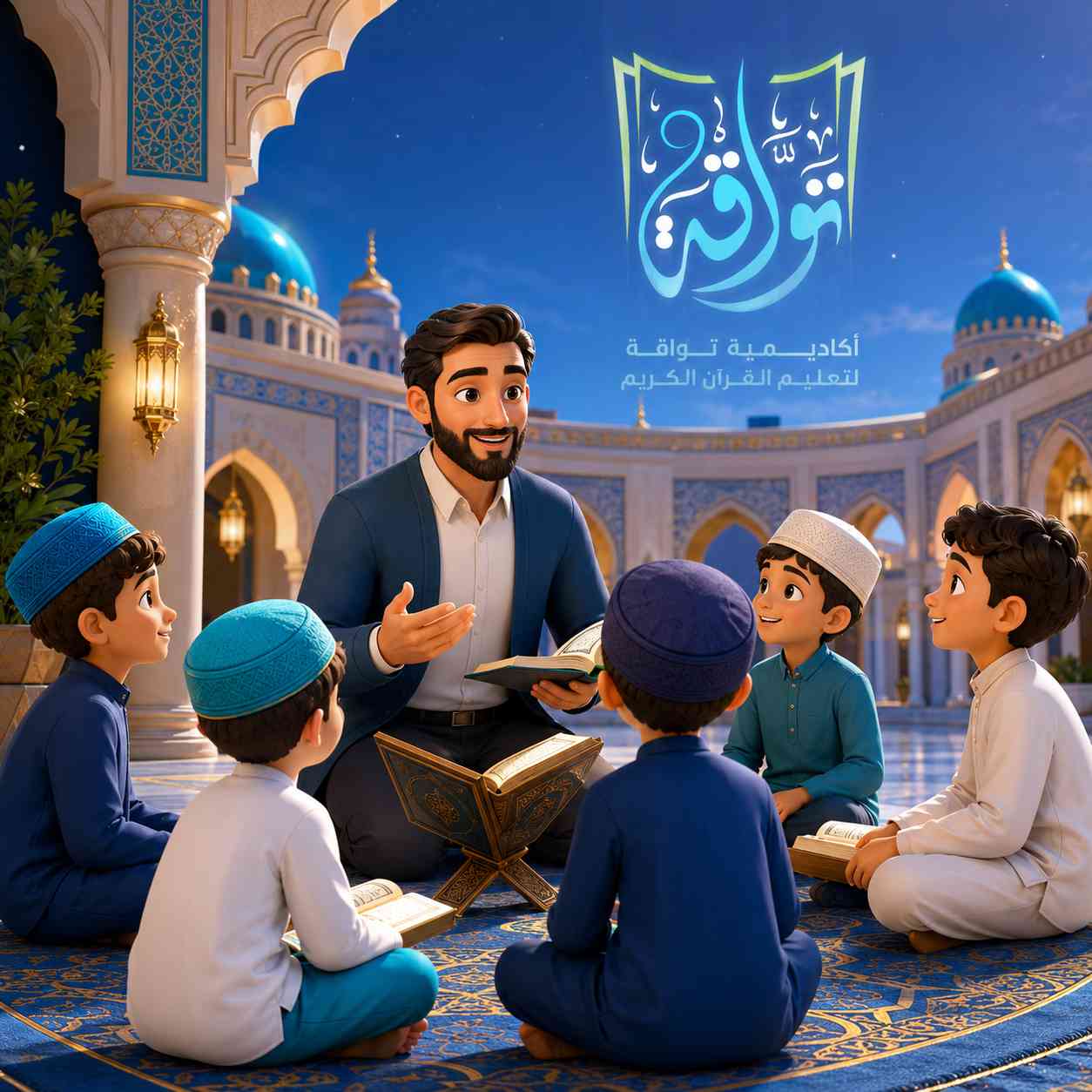
The summary of this series is that I have collected the verses in the Qur’an where Allah mentioned the Qualities of the Believers, and I have tried to present them to the parent or teacher: How to sit with your child and open the Mus'haf. How beautiful this session is! Imagine being at home, three days a week, or perhaps just five minutes every day, sitting with your wife and children, reciting these verses, and they recite them after you or with you, or each one of them recites these verses. Then you pause with them to contemplate these verses and extract the knowledge and action they contain.
By Allah, this is the blessing of the homes in the houses {which Allah has ordered to be raised and that His Name be mentioned therein; exalting Him within them in the mornings and the evenings. Men whom neither commerce nor selling distracts from the remembrance of Allah} [An-Nūr: 36-37]... to the end of the verses. One of the greatest Qur’an sessions with children is to teach them the Dye of Allah that He wants them to be upon.
I have collected for you more than 40 passages from the Book of Allah. In each lesson, we will pause at one passage, first reciting the verses, and then learning how to address these verses to our children to teach them the Dye of Allah and the qualities of the believers.
Of course, the parents will have duties, such as that we will announce the passage that is in the course of study, so that the parent can prepare this passage. Honestly, I want to gain more than one benefit:
That the parent learns their religion in an organized and systematic way.
That they learn how to convey this information to their children, thereby earning the immense reward of being the one who teaches their children their religion.
Believe me, by Allah, if you send your children to the best sheikh and the best teacher and provide them with books, this can never equal you sitting with your child and family, opening the Mus'haf, reciting these verses, having them read them with you, and then commenting on these verses with what you have heard and prepared from the words of the commentators (Mufassirūn). By Allah, this is the Paradise of this World.
I swear by Allah, if the Muslim saw the status of righteous deeds with Allah, they would know that everything people are tempted by—appearance, status, lineage, positions, wealth, adornment, and luxury—even if all of it were collected, it would not equal a single righteous deed, even if people consider it a small deed. And there is nothing small in a righteous deed.
That is why our Lord said:
إِنَّا جَعَلْنَا مَا عَلَى الْأَرْضِ زِينَةً لَّهَا لِنَبْلُوَهُمْ أَيُّهُمْ أَحْسَنُ عَمَلًا (7) وَإِنَّا لَجَاعِلُونَ مَا عَلَيْهَا صَعِيدًا جُرُزًا [الكهف: 7-8]
{Indeed, We have made that which is on the earth an adornment for it that We may test them as to which of them is best in deed. And indeed, We will certainly render whatever is upon it a barren ground.} [Al-Kahf: 7-8] Everything on earth—appearance, form, body, positions, homes, palaces, and gardens—Allah will make it barren ground. Only one thing remains: righteous deeds. That is why our Lord called righteous deeds in Sūrat al-Kahf (The Cave):
الْبَاقِيَاتُ الصَّالِحَاتُ [الكهف: 46]
{The enduring good deeds} [Al-Kahf: 46]. Because they are the only ones that endure.
Therefore, you must differentiate between nurturing your child (Ri’āyah) and reforming your child (Iṣlāḥ). Providing them with food, drink, clothing, school, lessons, excellence, a beautiful home, and a strong nationality that you think protects them—all of this falls under nurturing. As for reformation, guidance, and steadfastness, and your child's transformation from a trivial, empty person to a Muslim raised in obedience to his Lord, knowing about his Lord and Messenger, his religion, the noble Companions, the prophets, the Sharīʿah of Islam, knowing how to perform ablution, how to bathe, how to pray, how to perform ʿUmrah, how to perform Hajj, what to do during trials, what to do during calamity, what to do when blessed—this, by Allah, is the best thing you can leave to your child.
Therefore, seek help from Allah and strive diligently. Free yourself from time thieves like the phone and other trivial matters that waste your life. Feel the immense responsibility towards your children. Your Lord is with you. Allah (Glorified and Exalted be He) will not abandon you; you will not go through this journey alone. Your Lord is with you, guiding, supporting, and directing, and your Lord guides your child. These are just means that we employ. We want to preserve the innate nature (Fiṭrah) of our children, help them remain upon Allah's guidance throughout their life in this world, and be together in the Gardens of Bliss.
So, we supplicate with the supplication of the believers:
رَبَّنَا هَبْ لَنَا مِنْ أَزْوَاجِنَا وَذُرِّيَّاتِنَا قُرَّةَ أَعْيُنٍ وَاجْعَلْنَا لِلْمُتَّقِينَ إِمَامًا [الفرقان: 74]
{'Our Lord, grant us from among our wives and offspring comfort to our eyes and make us a leader for the righteous.'} [Al-Furqān: 74] How beautiful is this supplication! It means: O Lord, make my eyes comfortable with the righteousness of my family and child. There is nothing in this world that can ever truly make a person happy while seeing their child in disobedience, wickedness, or disbelief, even if they were given the whole world. Rather, their eyes are comforted by their child's righteousness, even if they lose most of the blessings. They might be lacking most blessings, but seeing their child upon righteousness, steadfastness, and guidance, learning the Book of their Lord, praying, maintaining prayer in the mosque, and having good manners—this comforts their eyes.
We ask Allah (Glorified is He) to make this series an aid for the respected parents in this great journey that has a beginning but no end. A person continues to call their children until they meet their Lord (Glorified and Exalted be He), and they desire for this word to remain enduring in their descendants. What does "remaining enduring in their descendants" mean? It means that this monotheism, guidance, and righteousness remain a seed planted in their descendants and inherited by generations, so that only a monotheist and a believer emerges from their offspring, by the permission of Allah (Glorified and Exalted be He).
We ask Allah (Glorified is He) to make this word enduring in our descendants. Our appointment, if Allah wills, will be four days a week. And before each session, if Allah wills, I will announce the verses so the parents can prepare them. And the lessons, if Allah wills, will be very light and will never exceed half an hour. May Allah bless you all, and we ask Allah to assist us in guidance, and that the duration of our life in this world be upon guidance from Allah.
By Allah, besides Whom there is no god, nothing in this world deserves to distract us from this path.
إِنَّكَ كَادِحٌ إِلَىٰ رَبِّكَ كَدْحًا فَمُلَاقِيهِ [الانشقاق: 6]
{O man, indeed you are laboring toward your Lord with [great] exertion and will meet it.} [Al-Inshiqāq: 6] So every person who sets the Hereafter before them and awaits the meeting with their Lord must prepare for it.
فَمَن كَانَ يَرْجُو لِقَاءَ رَبِّهِ فَلْيَعْمَلْ عَمَلًا صَالِحًا وَلَا يُشْرِكْ بِعِبَادَةِ رَبِّهِ أَحَدًا [الكهف: 110]
{So whoever would hope for the meeting with his Lord—let him do righteous work and not associate anyone with the worship of his Lord.} [Al-Kahf: 110] And all praise is due to Allah, the Lord of the worlds.
Our appointment for the introduction to this series, "How do I teach my child the Dye of Allah, which is the Qualities of the Believers in the Qur’an? How do I start with him?" will be tomorrow, if Allah wills, at the same time.
And peace, mercy, and blessings of Allah be upon you.
If you see that this episode is important for parents and you know someone who is interested in this matter, please share this episode with them, hoping to encourage them on this path. Because it is very important to me that the parent sits, opens the Mus'haf, opens a book of Tafseer, listens, prepares, and makes time at home to gather with their children. This is very important to me. And all praise is due to Allah, the Lord of the worlds. And peace be upon you.
This article is a transcript of the first lecture in the series "How to Teach My Child the Qualities of the Believers in the Qur'an" by Sheikh Hussein Abdul Razek.


Comments