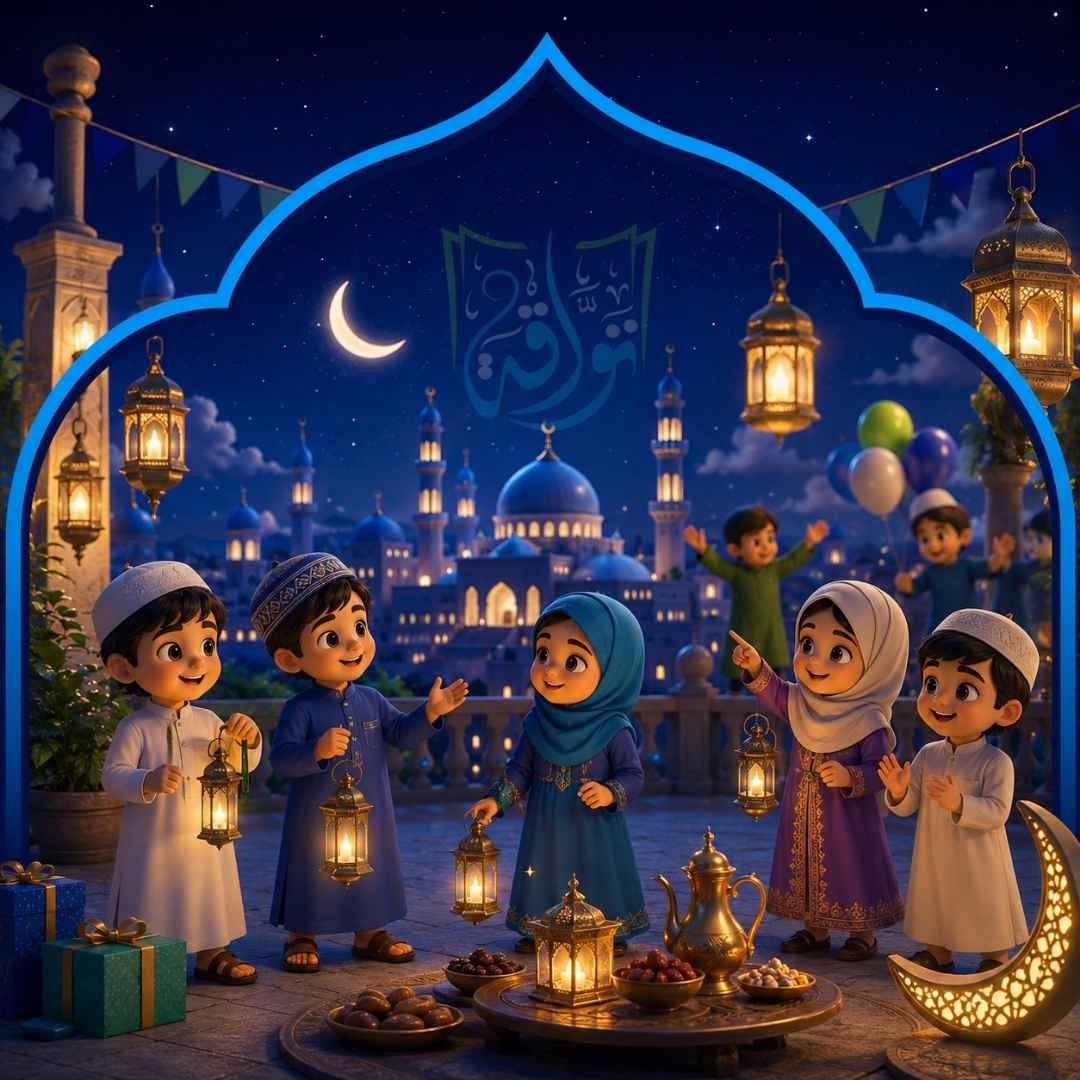
"The month of Ramadan has come."
Prof.Mohamed noredeen
Praise be to Allah, Lord of the Worlds. Praise be to Allah, Who has bestowed His favor upon His servants by granting them spiritual seasons to return to Him and turn their hearts toward Him. Glory be to Him, a Magnificent God Who has blessed us, showered us with His bounties, poured down His gifts, and honored us with His immense generosity.
I bear witness that there is no deity worthy of worship except Allah alone, without any partner. And I bear witness that our master and Prophet, Muhammad, is the servant and Messenger of Allah, His chosen one among creation, and His close friend (Khalil). He is the best of those who prayed and fasted, the best of those who observed the night prayers (Tahajjud) and stood before Allah, the best of those who obeyed the command of their Lord and remained steadfast, and the best of those who prepared for the Day of Gathering. O Allah, send Your peace, blessings, and benedictions upon him, his family, and his companions as long as nights succeed each other and days alternate.
To proceed:
The Month of Ramadan: The Month of the Quran
Out of the divine wisdom of Allah Almighty, He has favored certain times over others and exalted specific seasons above others. Among these highly favored times is the blessed month of Ramadan. This is the virtue-filled month that the Lord of the Worlds singled out for honor and veneration by revealing the Magnificent Quran within it. Allah the Almighty states:
﴿شَهْرُ رَمَضَانَ الَّذِي أُنْزِلَ فِيهِ الْقُرْآنُ هُدًى لِلنَّاسِ وَبَيِّنَاتٍ مِنَ الْهُدَى وَالْفُرْقَانِ﴾
"The month of Ramadan [is that] in which was revealed the Quran, a guidance for the people and clear proofs of guidance and criterion." [Surah Al-Baqarah: 185]
The Virtue of Ramadan and the Month of the Quran
The Lord of the Worlds (Glorified and Exalted be He) revealed the Quran during Ramadan—the month of fasting. Fasting and the Quran share a profound bond, as they will both intercede for the servant on the Day of Resurrection. The Prophet ﷺ said:
"الصيام والقرآن يشفعان للعَبد يوم القيامة، يقول الصيام: أي رب، منعته الطعام والشهوات بالنهار فشفعني فيه، ويقول القرآن: منعته النوم بالليل فشفعني فيه، قال: فَيُشَفَّعَان"
"Fasting and the Quran will intercede for the servant on the Day of Resurrection. Fasting will say: 'O Lord, I prevented him from food and desires during the day, so let me intercede for him.' And the Quran will say: 'I prevented him from sleep at night, so let me intercede for him.' The Prophet ﷺ added: 'Thus, they will both be allowed to intercede.'" [Sunan Ahmad / Classified as Authentic]
Furthermore, Ibn Abbas (may Allah be pleased with him) narrated:
"كان رسول الله صلى الله عليه وسلم أجود الناس، وكان أجود ما يكون في رمضان حين يلقاه جبريل، وكان يلقاه في كل ليلة من رمضان فيدارسه القرآن، فلرسول الله صلى الله عليه وسلم أجود بالخير من الريح المرسَلَة"
"The Messenger of Allah ﷺ was the most generous of all people, and he used to be more generous in Ramadan when Jibril (Gabriel) met him. Jibril used to meet him every night of Ramadan to study the Quran with him. Verily, the Messenger of Allah ﷺ was more generous in doing good than a blowing wind [which brings rain]." [Sahih Al-Bukhari]
The Virtue of Reciting and Pondering the Quran
Since this was the practice of the Prophet ﷺ during Ramadan, it is our binding duty to wholeheartedly turn to the Quran through recitation, memorization, and deep contemplation (Tadabbur). Allah the Almighty commands:
﴿فَاقْرَءُوا مَا تَيَسَّرَ مِنَ الْقُرْآنِ﴾
"So recite what is easy from the Quran." [Surah Al-Muzzammil: 20]
The Prophet ﷺ highlighted the immense rewards of this devotion, stating:
"من قرأ حرفا من كتاب الله فله به حسنة، والحسنة بعشر أمثالها، لا أقول {الم} حرف، ولكن ألف حرف، ولام حرف، وميم حرف"
"Whoever recites a letter from the Book of Allah, he will receive one reward, and a good deed is rewarded tenfold. I do not say that Alif-Lam-Mim is one letter, but Alif is a letter, Lam is a letter, and Mim is a letter." [Jami' at-Tirmidhi]
A single letter from the Holy Quran yields a good deed, and that good deed is multiplied tenfold up to seven hundred times. Therefore, a Muslim should never let this holy month pass by without completing the recitation of the entire Quran at least twice. The Prophet ﷺ strongly urged:
"اقرءوا القرآن فإنه يأتي يوم القيامة شفيعا لأصحابه، اقرءوا الزهراوين (البقرةَ وسورةَ آل عمران)، فإنهما تأتيان يوم القيامة كأنهما غمامتان، أو كأنهما غيايتان، أو كأنهما فرقان من طير صواف، تُحَاجَّان عن أصحابهما، اقرءوا سورة البقرة، فإن أخذَها بركة، وتركهَا حسرة، ولا تستطيعُها البطَلة"
"Recite the Quran, for it will come on the Day of Resurrection as an intercessor for its companions. Recite the two bright ones—Surah Al-Baqarah and Surah Ali 'Imran—for they will come on the Day of Resurrection like two clouds, or two shades, or like two flocks of birds in ranks, pleading on behalf of their companions. Recite Surah Al-Baqarah, for adhering to it is a blessing, abandoning it is a cause of grief, and the magicians cannot confront it." [Sahih Muslim]
Some scholars have noted: "Whoever recites even a single page of the Book of Allah every day is not counted among those who have abandoned the Quran." Let each of us strive diligently to attain this immense reward during Ramadan, the month of the Quran.
The Quran brings absolute goodness to everything it touches: it was revealed in Ramadan, making it the best of all months; it descended on the Night of Decree (Laylat al-Qadr), making it better than a thousand months. What then would happen if the Quran truly settled deep within our hearts? Today, many hearts have hardened, failing to show humility or be moved when hearing the words of our Lord. Yet Allah the Almighty says:
﴿لَوْ أَنْزَلْنَا هَذَا الْقُرْآنَ عَلَى جَبَلٍ لَرَأَيْتَهُ خَاشِعًا مُتَصَدِّعًا مِنْ خَشْةِ اللَّهِ﴾
"If We had sent down this Quran upon a mountain, you would have seen it humbled and coming apart from fear of Allah." [Surah Al-Hashr: 21]
The Commander of the Faithful, Uthman ibn Affan (may Allah be pleased with him), beautifully stated: "If our hearts were truly purified, we would never find our fill in the speech of our Lord; and I detest that a single day should pass without me looking into the Mushaf (the written copy of the Quran)."
What is the Secret Behind the Deep Devotion to the Quran in Ramadan?
If we contemplate the underlying connection between Ramadan and our natural inclination toward the Quran, we find that fasting directly disciplines and purifies the human soul, making it receptive to the divine text. During the days of fasting, the soul reaches a state of tranquility and calm because it restrains itself from excessive food.
This demonstrates that one of the greatest keys to understanding and pondering the Quran is to minimize worldly excesses (Fudul), such as: overeating, excessive looking, unnecessary socializing, and idle listening. As these worldly barriers fade away, the veils between the human heart and the Quran dissolve. Ramadan is the ideal time for this spiritual breakthrough because fasting curtails physical desires (food, drink, and intimacy), while the practice of spiritual seclusion (I'tikaf) minimizes excessive socializing and idle talk, making it uniquely the month of the Quran.
Therefore, let us remain committed to establishing a daily session with the Holy Quran during Ramadan and maintaining it consistently after Ramadan. The Prophet ﷺ declared:
"يقال لصاحب القرآن: اقرأ، وارق، ورتل كما كنت ترتل في الدنيا، فإن منزلتك عند آخر آية تقرؤها"
"It will be said to the companion of the Quran [on the Day of Judgment]: 'Recite and ascend, and recite slowly and distinctly as you used to recite in the worldly life, for your cosmic status and rank will be at the last verse you recite.'" [Sunan Abi Dawud / Jami' at-Tirmidhi]
Conclusion
In conclusion, we ask Allah the Almighty to aid us and you in establishing His obedience during Ramadan. May He allow our fasting, our night prayers, and our Quranic recitations to intercede for us, and may He save our necks from the Hellfire. May the peace and blessings of Allah be upon our master Muhammad, his family, and all his companions.
Written by: Dr. Muhammad Nour El-Din Professor at Al-Azhar University

Comments